
Blog
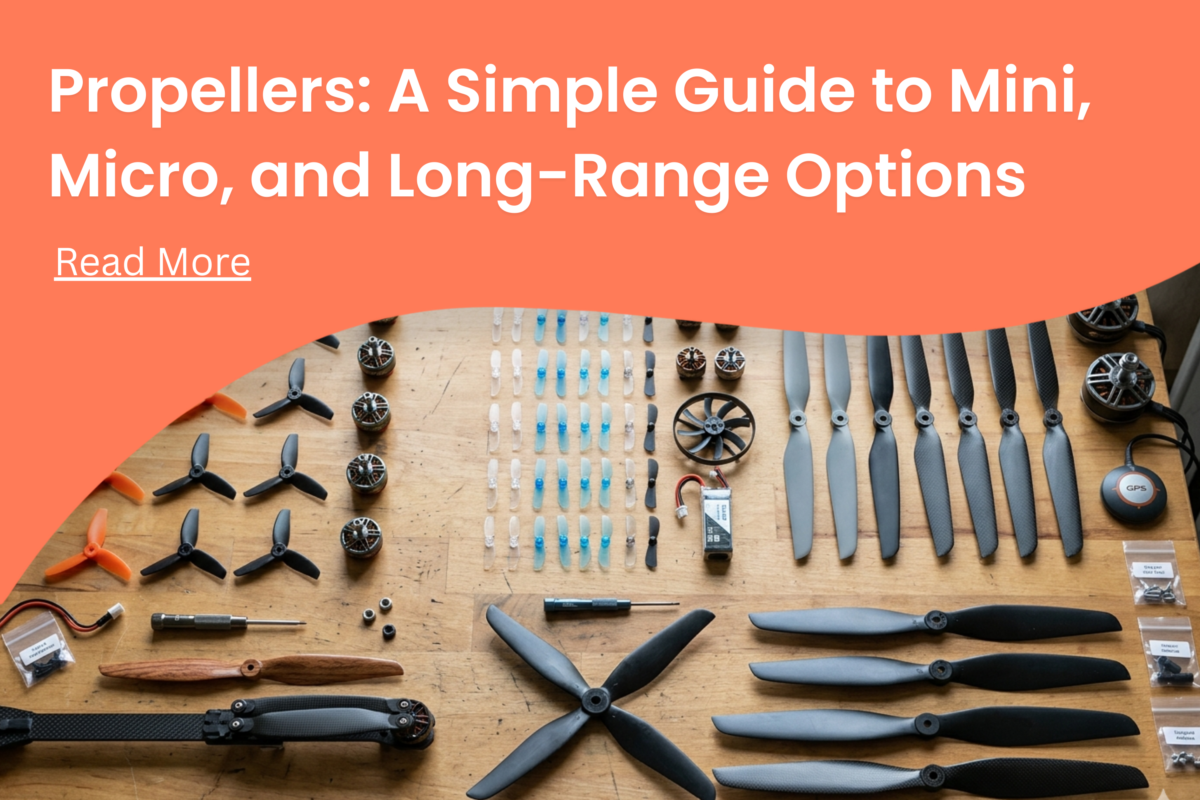
Propellers: A Simple Guide to Mini, Micro, and Long-Range Options
Mar
When it comes to propellers used in drone technology or RC aircraft, it’s not just about rotation; it has a lot to do with the performance that your drone gets in the air or how it responds in the air, whether it has good speed, stability, or even sound production while in operation. Using the right propellers will also make your drone respond smoothly with lots of power; otherwise, you may have vibrations or even heat issues with your drone’s motor.
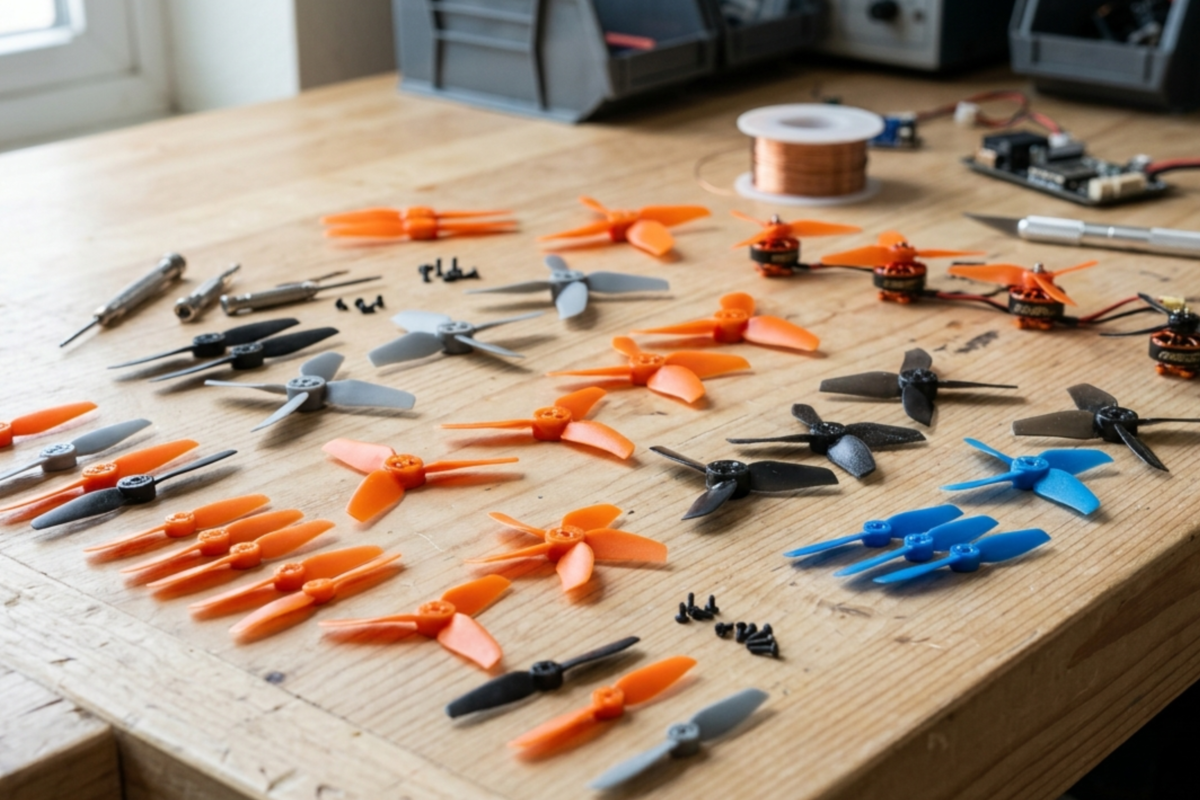
Propellers are available in various sizes, shapes, and materials, each being suitable for a particular mode of flying. A number of the most popular propellers are Mini Propellers(5″+), Micro Propellers(1″+), and Long-Range Propellers(7″+). Knowing the difference between them can enable you to extract the maximum possible results from them.
How Propellers Actually Work
A propeller creates lift by pulling air from above and pushing it downward as it spins. The way it does this—and how efficiently it uses power—depends on a few important factors:
- Diameter: Bigger propellers move more air, producing more thrust.
- Pitch: A higher pitch pushes air faster, increasing speed but using more power.
- Blade count: More blades improve grip and control but slightly reduce efficiency.
- Material: The material affects strength, flexibility, weight, and durability.
All these elements work together to shape how your drone behaves in the air.
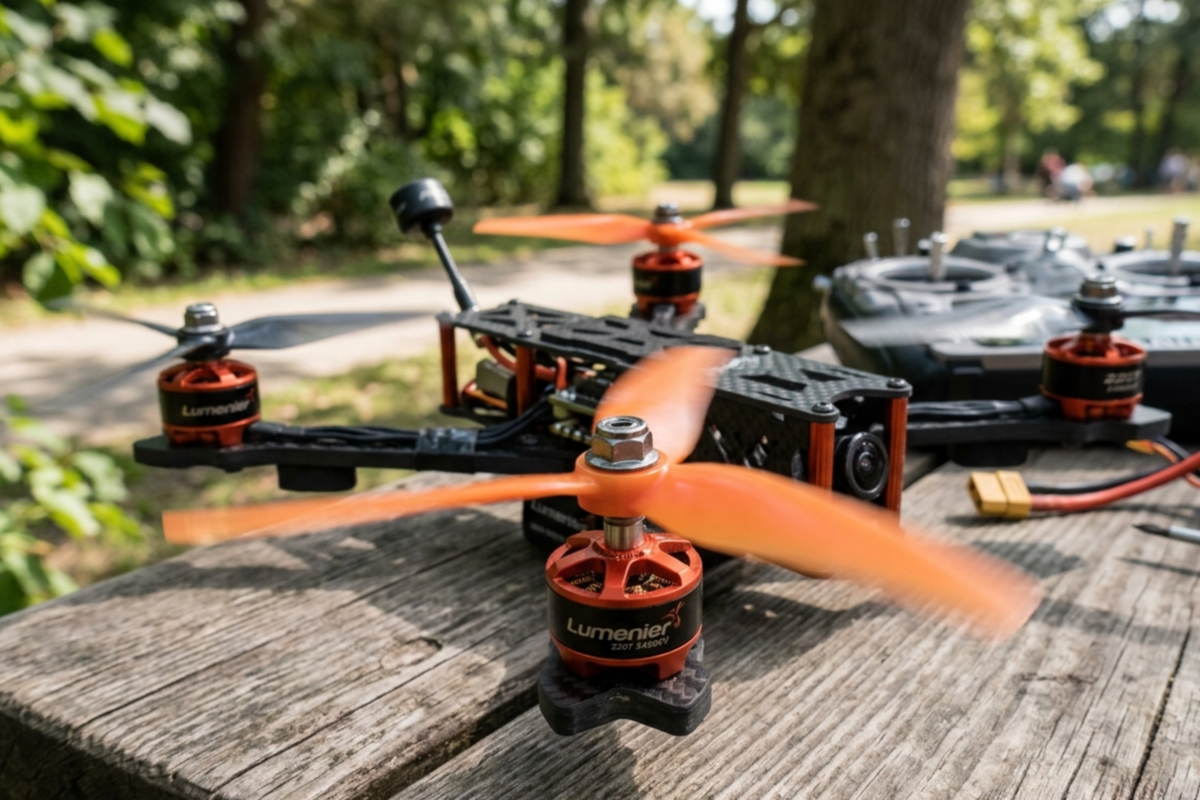
Mini Propellers (5″+)
Mini propellers, starting at 5 inches and above, are the go-to choice for most FPV pilots. They strike an excellent balance between power, responsiveness, and efficiency, making them ideal for freestyle and racing drones.
Why Pilots Love Mini Propellers:
- Quick throttle response and sharp control
- Perfect for flips, rolls, and fast direction changes
- Works well with popular 22xx–23xx motors
- Affordable and easy to replace after crashes
Best Used For:
- FPV freestyle flying
- Drone racing
- Light cinematic setups
The classic 5-inch propeller remains the most popular size because it delivers strong acceleration without draining the battery too quickly. Slightly larger options like 5.1″, 5.5″, or even 6″ offer smoother flight and better efficiency while still keeping the drone agile.
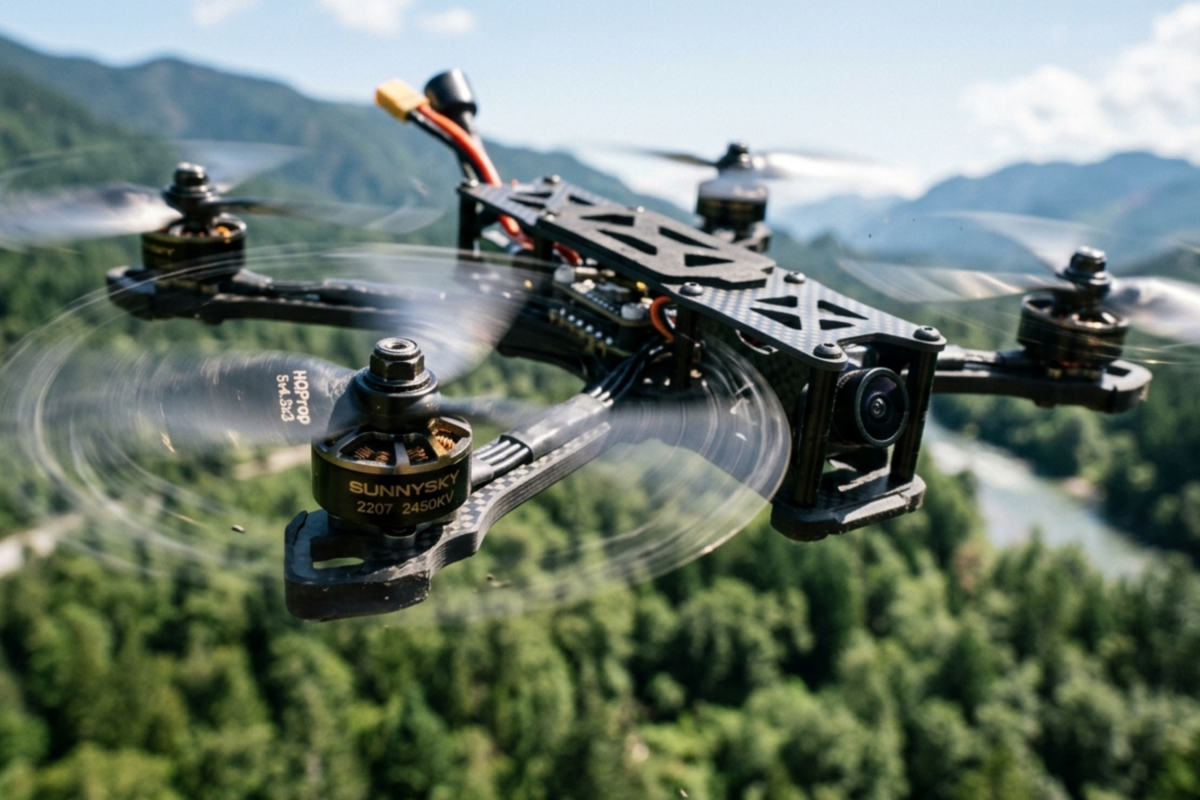
Micro Propellers (1″+)
Micro propellers, starting from 1 inch and above, are built for small drones and indoor flying. These props are all about efficiency, safety, and smooth handling rather than raw power.
Key Benefits of Micro Propellers:
- Extremely lightweight, reducing strain on motors
- Designed for low power consumption
- Safer for indoor and close-range flying
- Stable hovering and gentle flight characteristics
Common Applications:
- Tiny whoops and micro FPV drones
- Indoor flight sessions
- Beginner practice drones
- DIY and educational projects
Micro propellers usually pair with brushed motors or small brushless motors. Sizes like 1.2″, 2″, and 3″ are common and help extend flight time while keeping noise and vibrations low. These props are perfect for learning and relaxed flying.
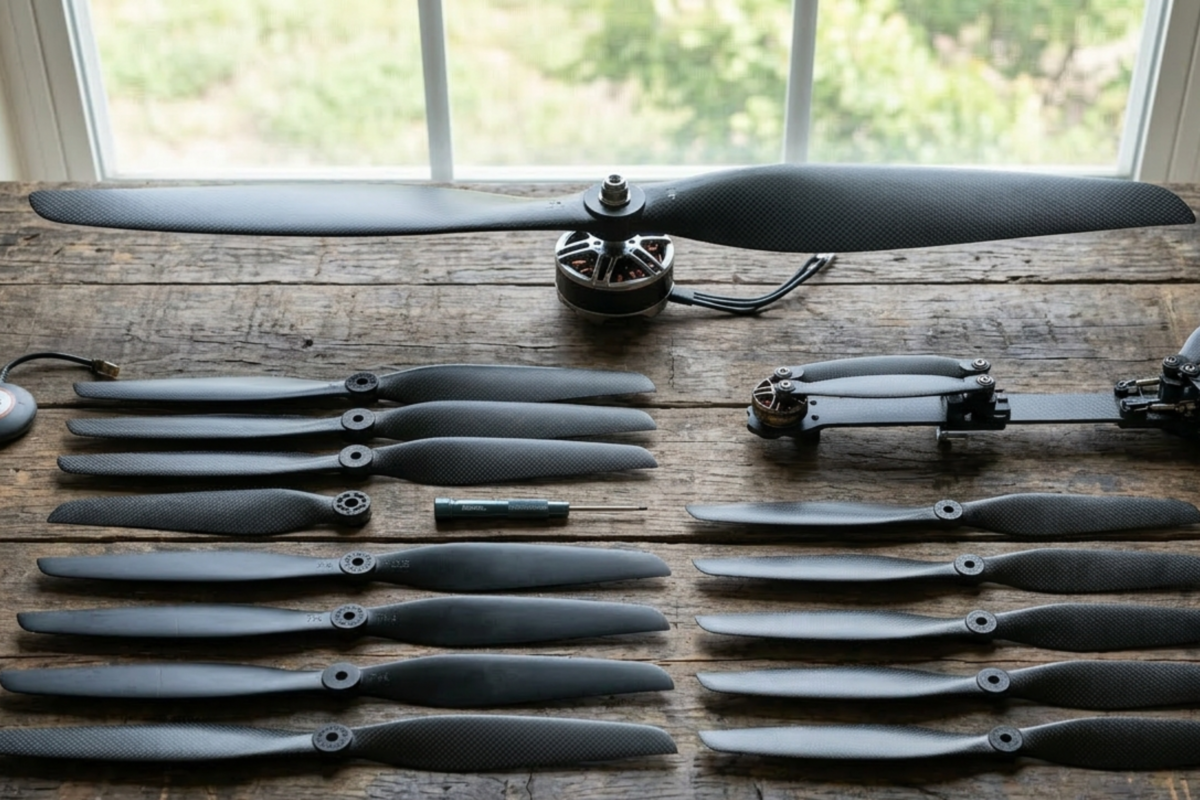
Long-Range Propellers (7″+)
Long-range propellers, measuring 7 inches and above, are designed for efficiency and endurance rather than speed. They are a favorite choice for pilots who want to fly farther, smoother, and longer.
What Makes Long-Range Propellers Special:
- Excellent efficiency for extended flight time
- Smooth cruising and stable performance
- Lower RPMs reduce heat and motor wear
- Better lift for heavier cameras and batteries
Ideal Use Cases:
- Long-range FPV exploration
- Cinematic aerial filming
- Mapping and surveying
- Heavy-lift drone builds
Sizes like 7″, 8″, 9″, and 10″ allow drones to cover long distances while using less battery power. These propellers are usually matched with low-KV motors and high-capacity batteries. While they don’t offer the sharp agility of smaller props, they excel in smooth, efficient flight.
How to Choose the Right Propeller
Before selecting a propeller, always think about:
- Your drone’s frame size
- Motor KV and power rating
- Battery voltage
- Your flying style—racing, freestyle, or long-range
Using the wrong propeller can overload motors or ESCs and reduce overall performance. Following manufacturer guidelines and testing different options is the best way to find the perfect match.
Conclusion
Propellers can look so simple, but the effect they have on how your drone flies is immense. Micro Propellers (1″+) dominate indoor and beginner drones, Mini Propellers (5″+) totally own freestyle and racing, while Long-Range Propellers (7″+) are required to ensure efficient and long-distance flights. Selecting the right propeller is not exactly about the size but finding the right equipment for your flying goals-a feat that ensures a much smoother, safer, and more enjoyable flight.
